
High-Throughput Neural Signal Acquisition and Analysis System
Applicable Experimental Animals
- Non-human primates (e.g., rhesus monkeys)
- Mammals (cats, dogs, ferrets)
- Amphibians (e.g., frogs)
- Rodents (rats,mice)
- Fish (e.g., zebrafish)
- Insects (fruit flies)
Applicable Research Fields
- Brain-computer interface
- Research on sensory: nociception, vision, audition, touch, etc
- Research on cognition: attention, learning, memory,decision-making, etc
- Research on Disease Mechanisms: for diseases like epilepsy, Parkinson’s disease, etc
- Research on the Mechanisms of Drugs
Advantages
Easy to Use
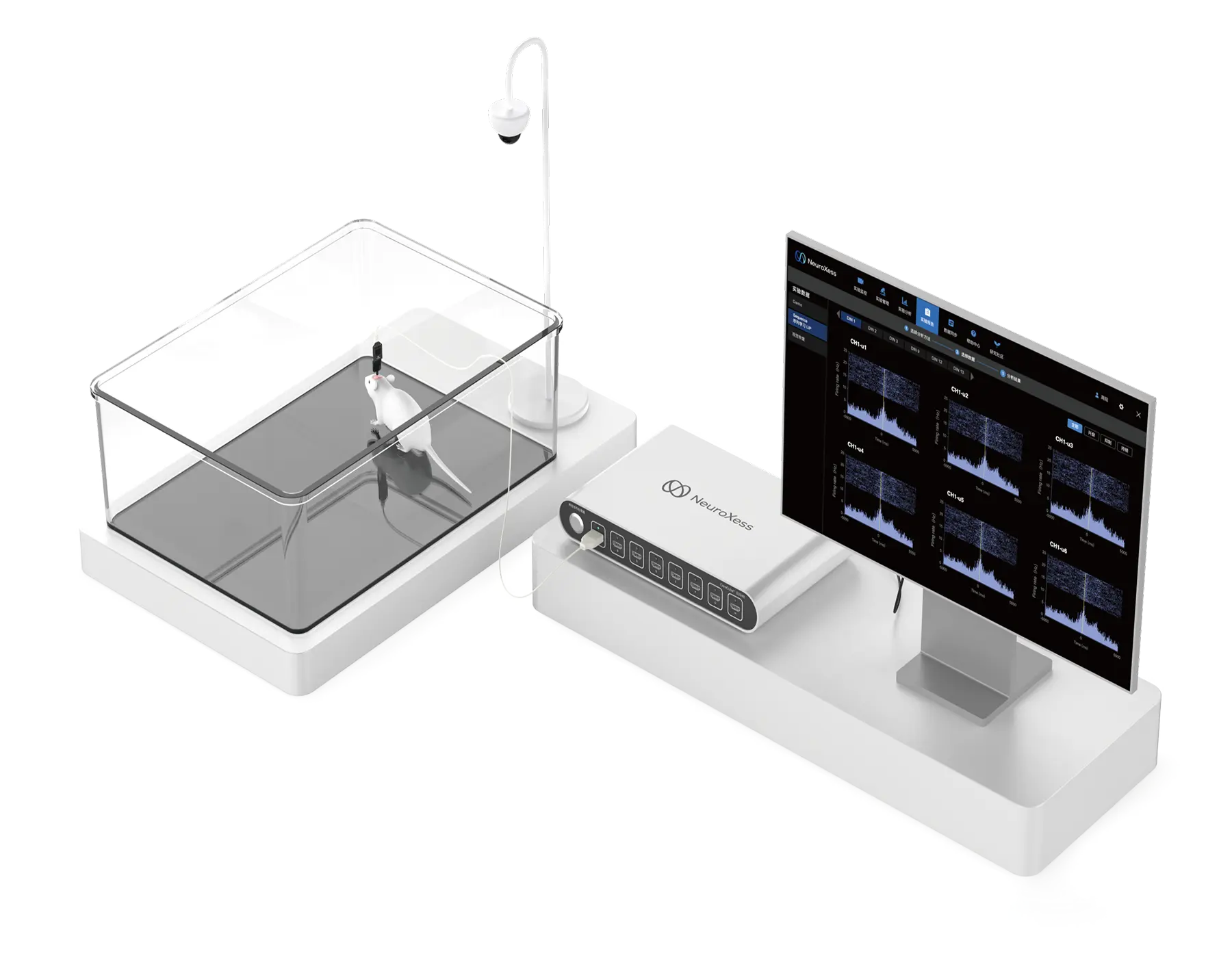
- Hardware is plug-and-play, consisting of a neural signal processor, a neural signal amplifier and a computer;
- The software features a streamlined interface and clear interaction logic, requiring no complex training for operation;
- Supports batch analysis according to experimental requirements and one-click export of full experimental results.
Platform-based
- Compatibility: The system can realize millisecond-level data synchronization with neuroscience research equipment for behavioral experiments, optogenetics, fiber recording and other technologies;
- Multi-modal: The system collects electrophysiological signals such as Spike and LFP, and can synchronously collect digital marking signals, audio, video and other analog signals;
- Full process: The software integrates data collection, experiment management and analysis of neural signals, covering the full workflow required for neuroscience research in one stop;
- Collaboration-friendly: The user account system facilitates personalized settings, management and sharing of experimental data.
High-throughput
- A single device supports up to 2048 channels at most, enabling simultaneous signal collection from a large number of brain regions and significantly improving experimental efficiency;
- It supports simultaneous recording of up to 8 animals, shortening experimental cycles and lowering research costs.
Automated
- CAR/CMR and other denoising methods are automatically applied during data acquisition;
- One-click spike sorting is realized in data preprocessing, the optimal sorting algorithm is automatically selected according to electrode characteristics, and sorting quality is automatically judged.
Customizable
- Supports customized algorithms and independent programs to meet user demands;
- Supports plug-in development, and customized algorithms can be developed and integrated into the system according to users’ data analysis requirements;
- SDKs for Python/Matlab/C++ are provided to develop real-time neuroscience research tools based on customer demands.
MindExplorer Software Platform
Experiment Monitoring
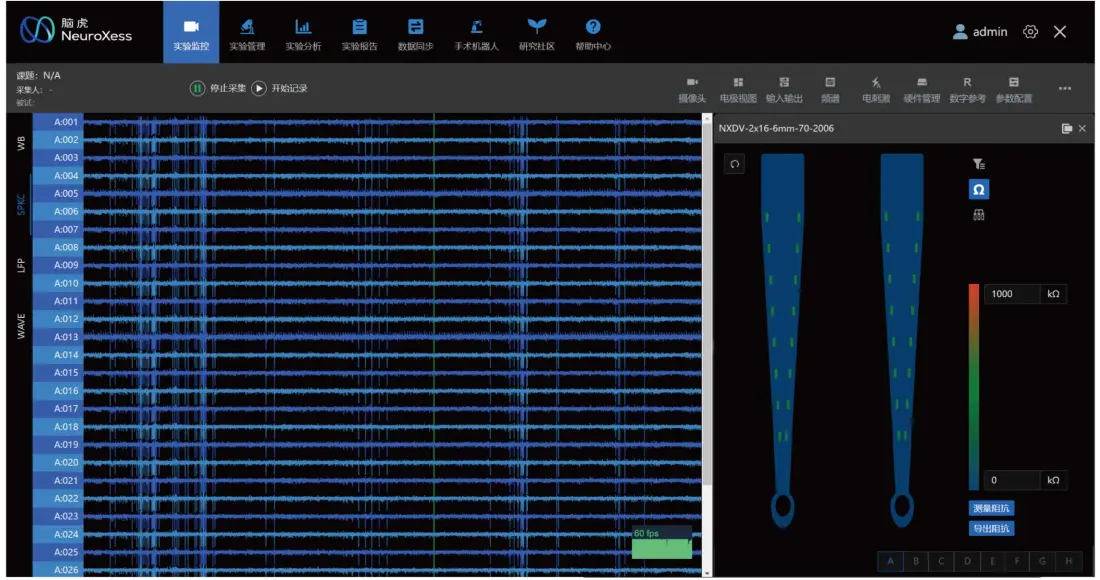
The electrophysiological data, electrode information, and other modality data such as audio and video can be viewed in real time. The ME enables flexible adjustment of the data display on the main interface, acquirement of inputs from external devices and control of other external devices via the I/O interface. Electrode contact diagrams can display signal conditions such as Spike, LFP and impedance in real time, with freely adjustable view sizes and freely movable independent pop-up windows.
Experiment Management
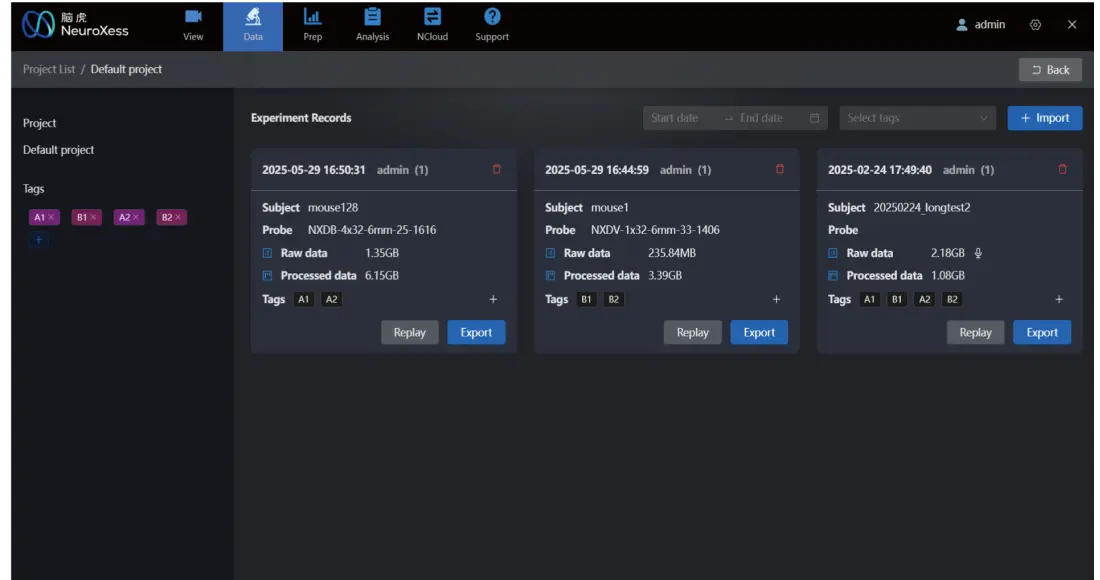
Users log in with their account and password to manage project data related to themselves. Efficient team collaboration can be achieved through the project permission management function. Experimental data is managed in a card format, supporting data-centric operation and management solutions.
-
Project ClassificationAll projects, projects I created, projects I participated in, and completed projects;
-
Experimental Records:Data cards include raw data and corresponding analytical data, with operation guidelines such as data export, analysis, deletion, and playback, as well as a function for supplementary editing of experimental information;
-
Data ExportSupports custom data export, allowing users to define the data range and format for export. Data can be exported in .mat or .mex formats;
-
Data ImportSupports data import in formats such as .plx, .pl2, and.nex5;
-
Data LabelingSupports labeling existing data to facilitate grouped and batch data analysis.
Experiment Analysis
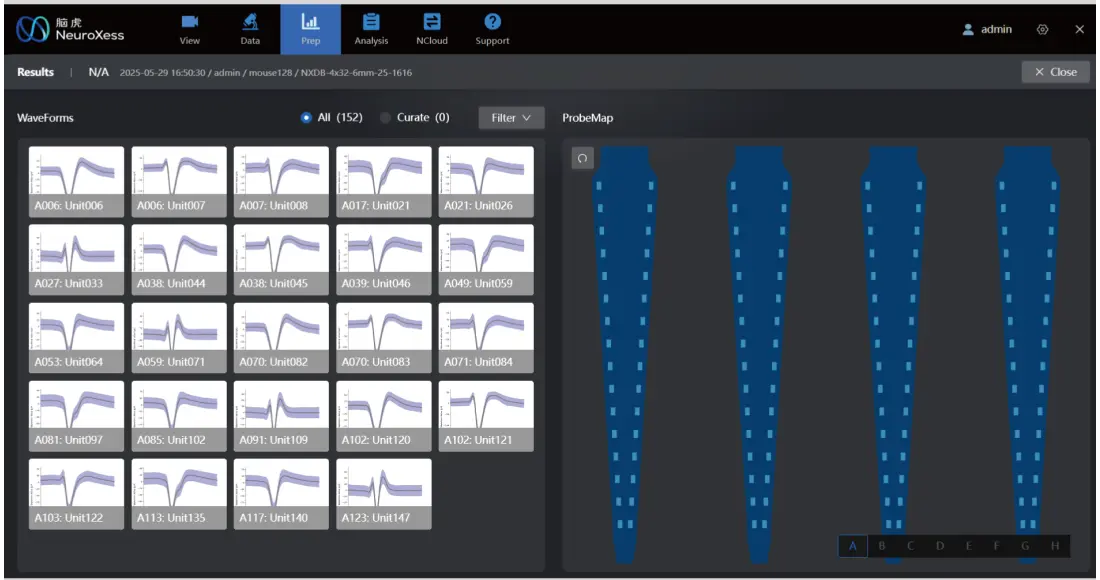
Offline preprocessing of raw data (WB) aims to identify the activity of single neurons with one-click sorting, which significantly reduces the workload of researchers.
·Multiple sorting operations are supported for one set of data, and historical sorting results can be viewed;
·Data recorded by different ports can be viewed separately;
·Bidirectional display correspondence between Unit waveforms and contacts: clicking a waveform locates its recording contact, and clicking a contact displays all Units recorded at that contact.
Experiment Report
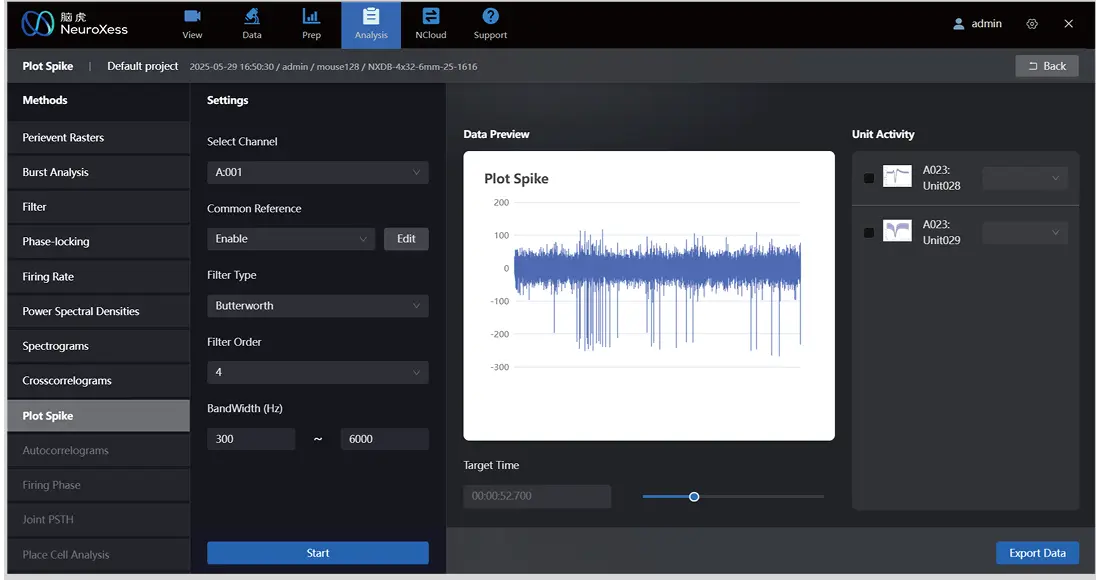
After sorting, users obtain the firing sequence of a single Unit, on which in-depth analysis can be conducted. By integrating I/O information data, LFP data, etc., users can carry out diverse data mining in the experiment report module. This module provides common analytical tools and also supports customized development of analytical tools as needed, and can export experimental reports.
Experiment Synchronization
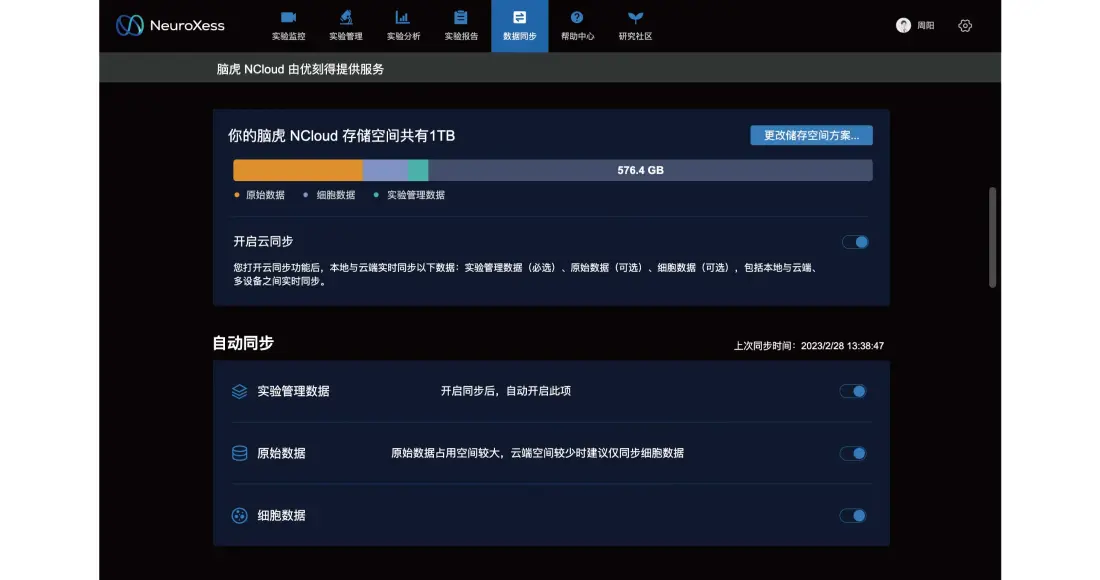
The software provides free cloud storage to automatically synchronize basic data such as software settings, user information, and experimental management, ensuring smooth cross-platform operations for users. Additionally, users can choose to back up data to the cloud to prepare for efficient remote collaboration.
Product
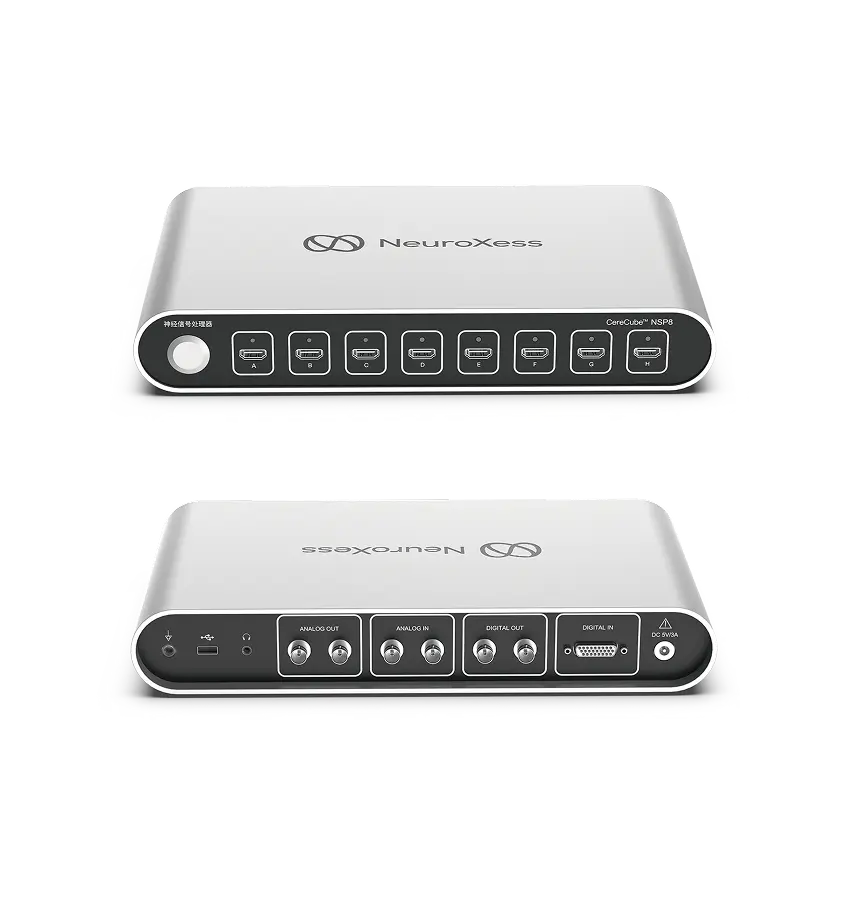
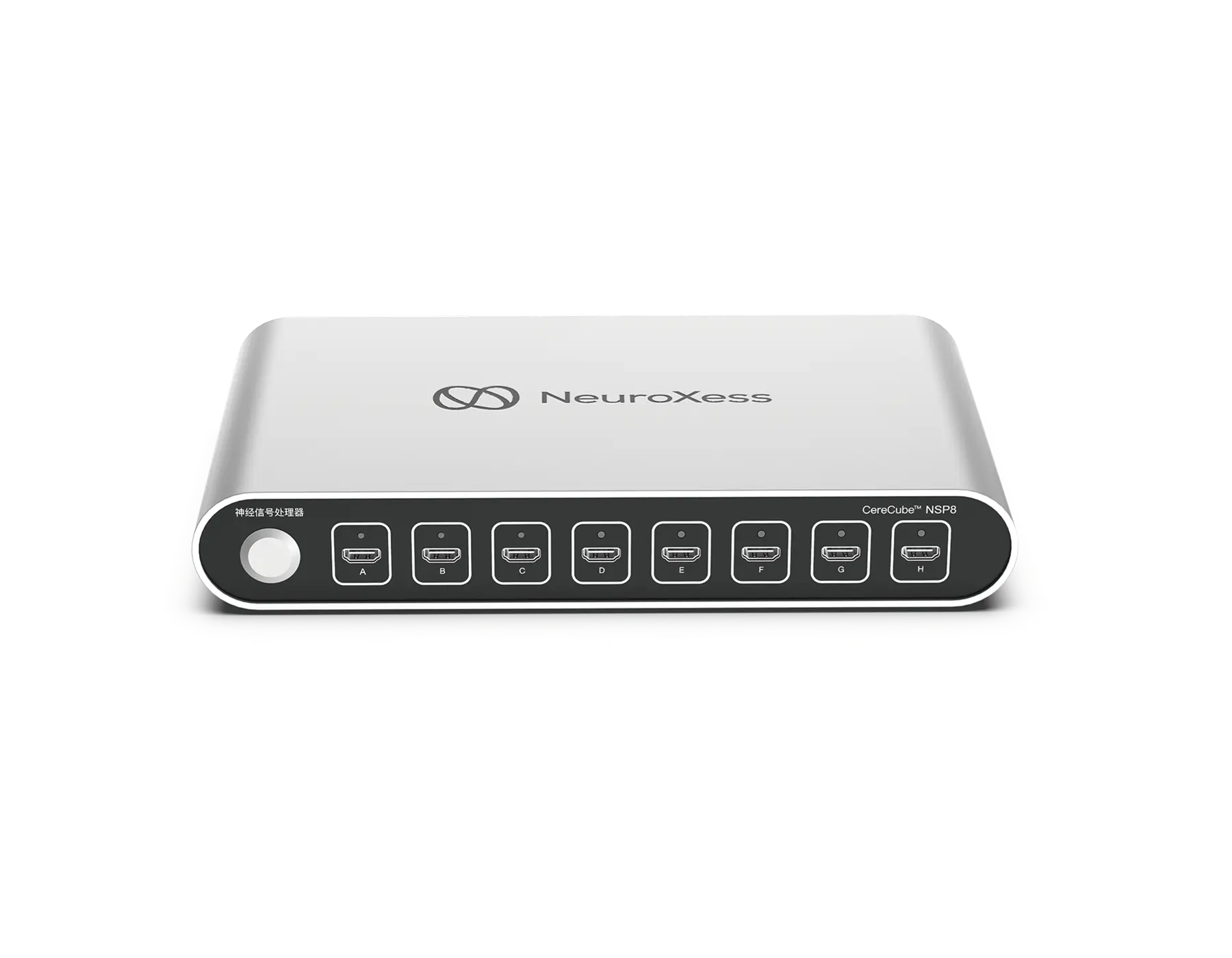
Neural Signal Processor
It can be used to collect, process and integrate neural signal data, as well as digital and analog input data. It can also be used to output digital signals and analog signals as required.
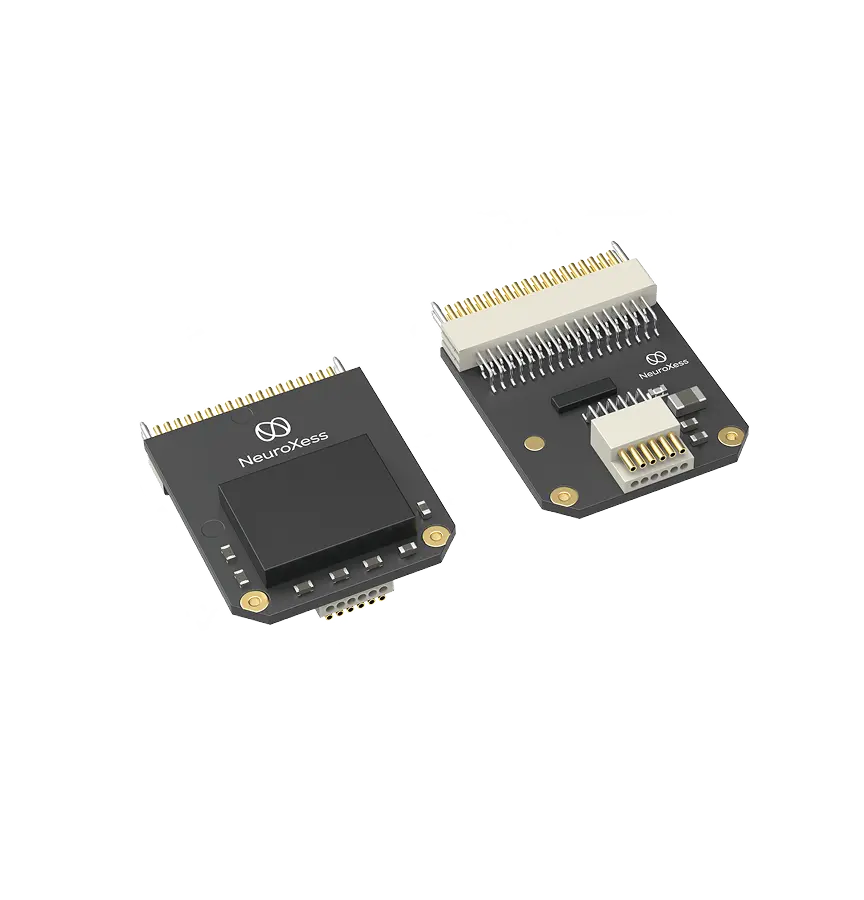
Neural Signal Amplifier
5 optional models.
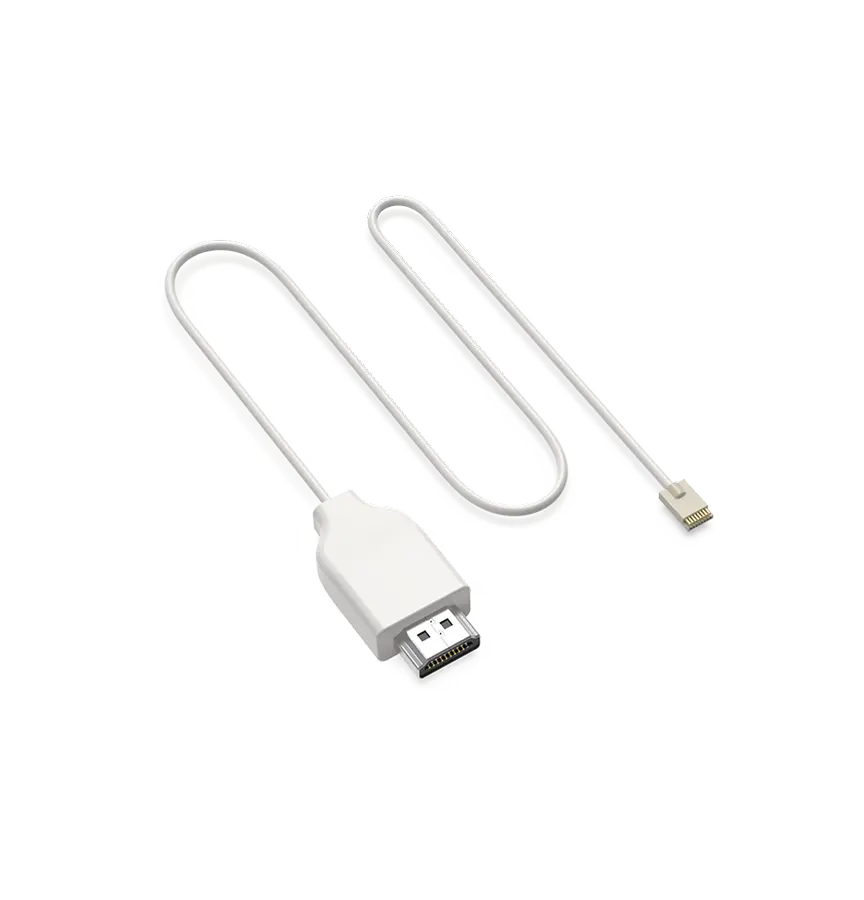
Amplifier Connection Cable
The CereCube uses a customized cable for transmitting serial digital signals. A cable with a specification of 2 meters is provided by default.
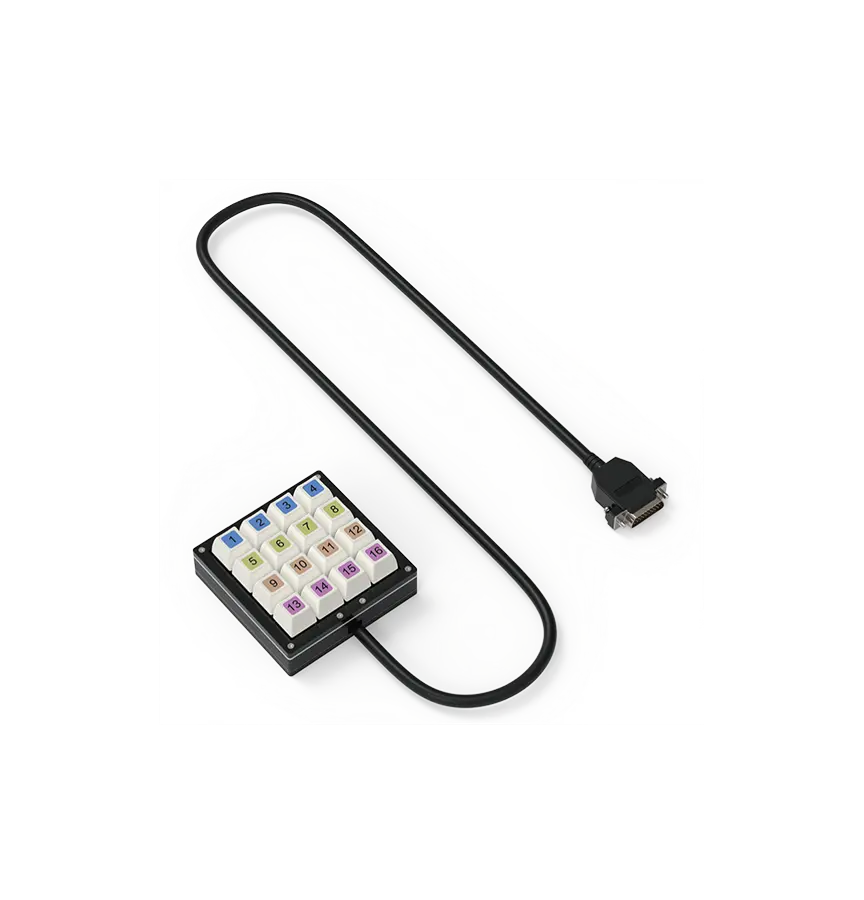
Digital input cable
It is used for the transmission of digital input signals and supports the signal transmission during recording for TTL, Strobe, and external clock signals.
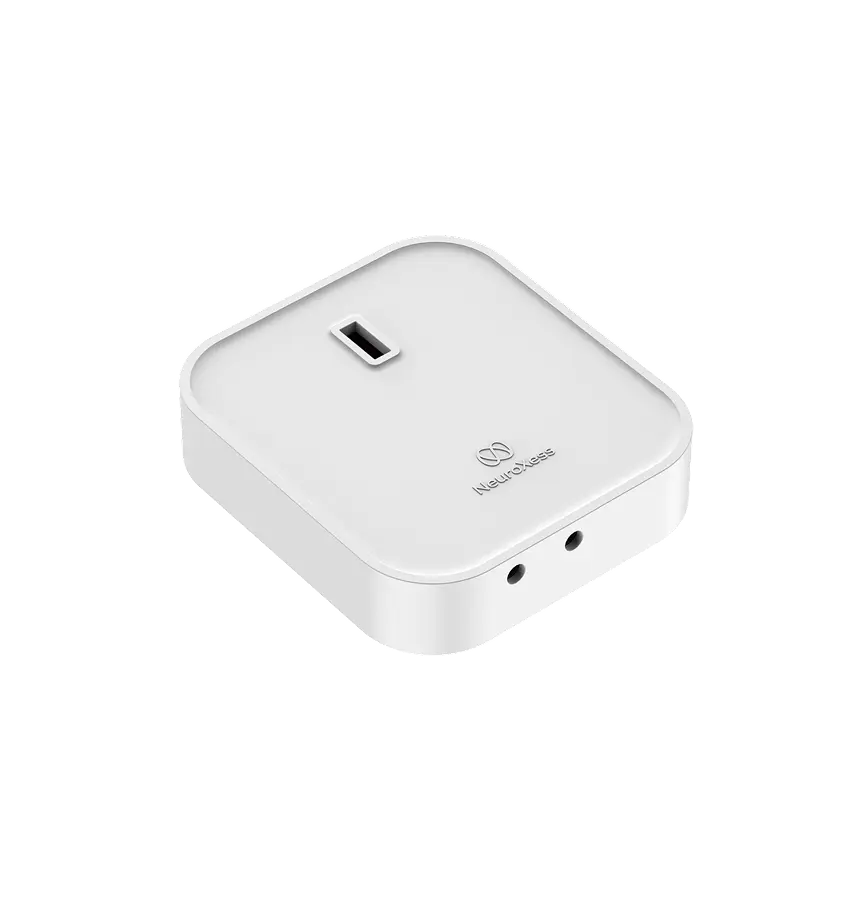
Test board
Input audio signals with LFP (Local Field Potential) and SPIKE signals for the test and comparison of neural signals and analog signals, which facilitates the quick identification of the cause when data issues occur.